Rijkswaterstaat — Digital Information Platforms & Public Communication
Making complex water-related information accessible to citizens, professionals and education.
Context
At the turn of the millennium, Rijkswaterstaat faced a dual challenge: providing easy access to large volumes of specialised water information while increasing public awareness of water management and the organisation’s role within it. Digital platforms were positioned as a key instrument to inform, connect and engage diverse audiences.
1. Waterland Courant (Waterland.net)
A central digital gateway for public and professional water information
Approach
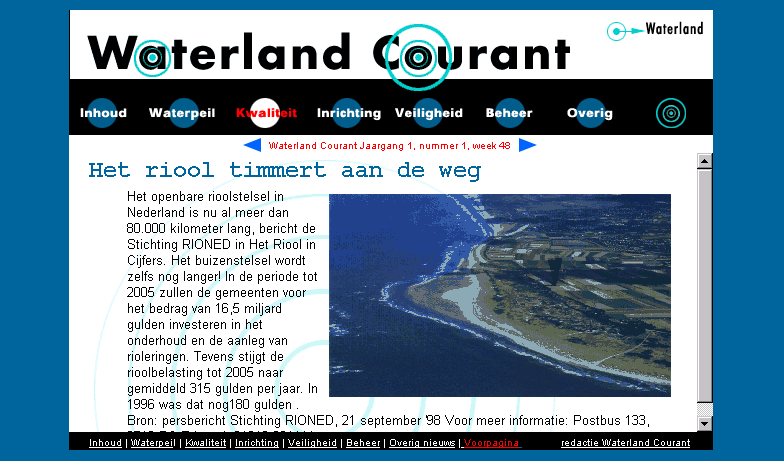
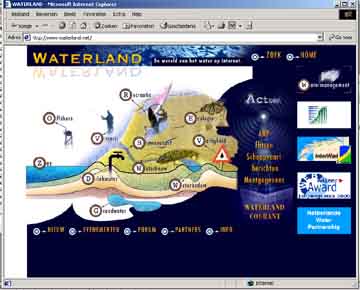
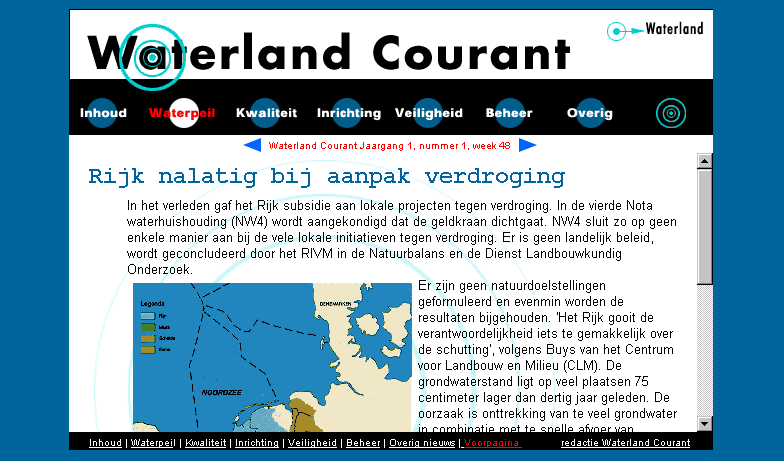
Waterland Courant was developed as an online newspaper designed to make water-related information accessible to a broad audience, including water managers, teachers, secondary school students and recreational users. The platform brought together nearly 130 partners under one digital umbrella — among them organisations such as ANWB and Greenpeace.
Content covered a wide range of topics, including water levels, water management, drinking water, educational games, a water glossary and sector-wide discussions. Technically, the platform was built around a publication system that allowed editors and contributors to keep content up to date without requiring design or programming knowledge.
Results & Impact
A single access point for water information for both citizens and professionals
Active collaboration between public bodies and societal organisations
A strong example of how government can inform and communicate online, rather than merely publish information
Recognition - Webwijzer Award
In 2000, Waterland.net received the Webwijzer Award, presented by Minister Van Boxtel. The jury praised the site for its design, relevance and its unique role as an overarching platform connecting multiple institutions.
2. WAQUARIUS
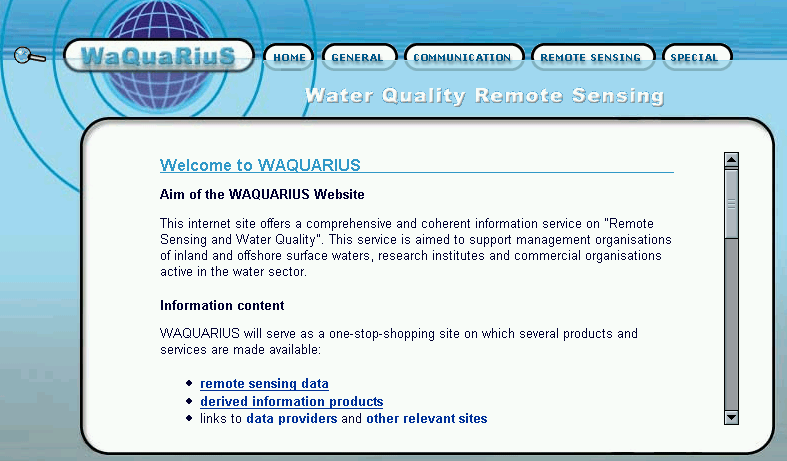
One-stop digital platform for water quality and remote sensing data
Context & objective
WAQUARIUS was developed for the Survey Department of Rijkswaterstaat and the Rijksrecherche of the Ministry of Infrastructure and Environment. The platform emerged from studies conducted within the NEONET-WATERNET project, an initiative of the Ministry and the REWANET group.
Approach
The platform provided access to remote sensing data related to water quality, alongside background information on systems such as LANDSAT, NOAA, MERIS, SeaWiFS and MOS. Additional supporting information included in-situ measurements, model simulations and depth maps. Communication and knowledge exchange were integral components of the platform.
Information was presented through a dynamic database, continuously updated by organisations across the water sector.
Collaboration
The project was realised in collaboration with KNMI, NLR, IVM and ARGOSS.
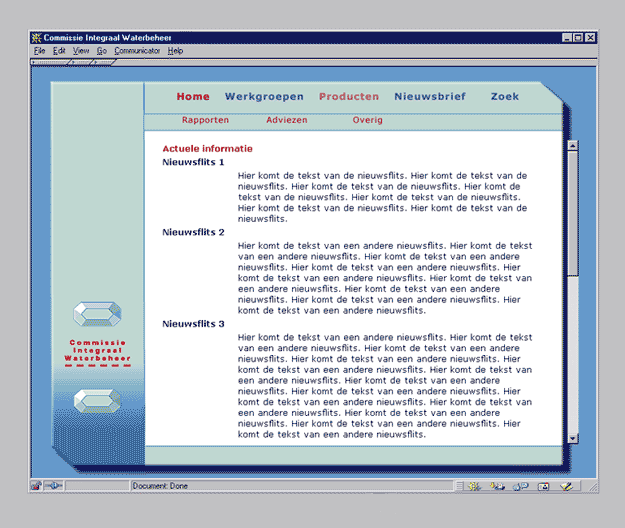
3. CIW — Coordination Committee for Integrated Water Management
Lorem ipsum dolor sit amet, consectetur adipiscing elit. Ut elit tellus, luctus nec ullamcorper mattis, pulvinar dapibus leo.
Digital support for policy development and standardisation
CIW was the governmental body responsible for advising on water-related legislation and for setting standards and guidelines for water managers. During this period, H.R.H. Prince Willem-Alexander (now King of the Netherlands) served as chairman of CIW in his capacity as a water manager.
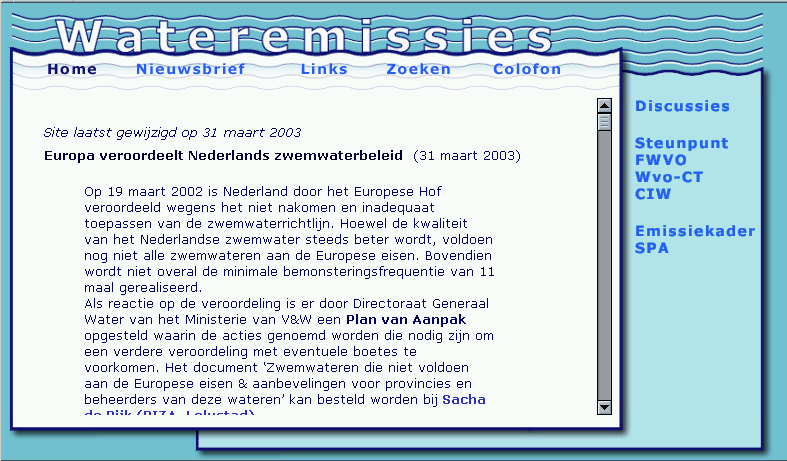
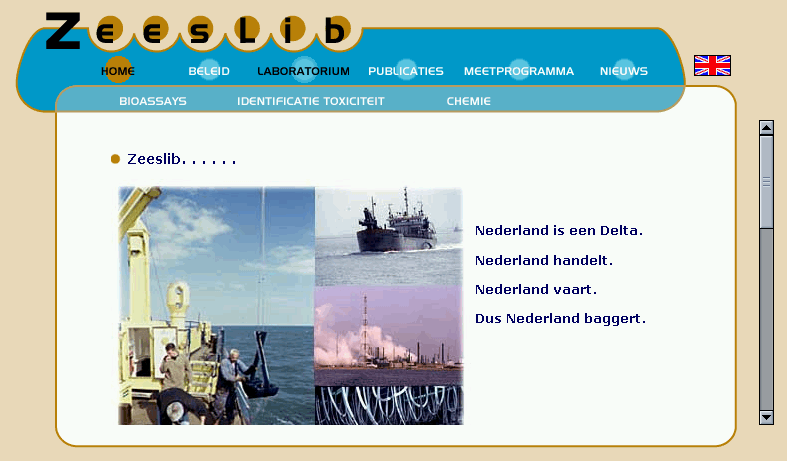
Within this framework, multiple digital projects and thematic environments were developed, including initiatives related to sea silt, water emissions and several RIZA knowledge and standards platforms (Monitoring Guidelines, SPA).
Overall Impact
These projects demonstrate how digital platforms can bridge the gap between government, professionals, education and the general public. By structuring, contextualising and clearly presenting complex information, water management became more transparent, accessible and open to engagement.