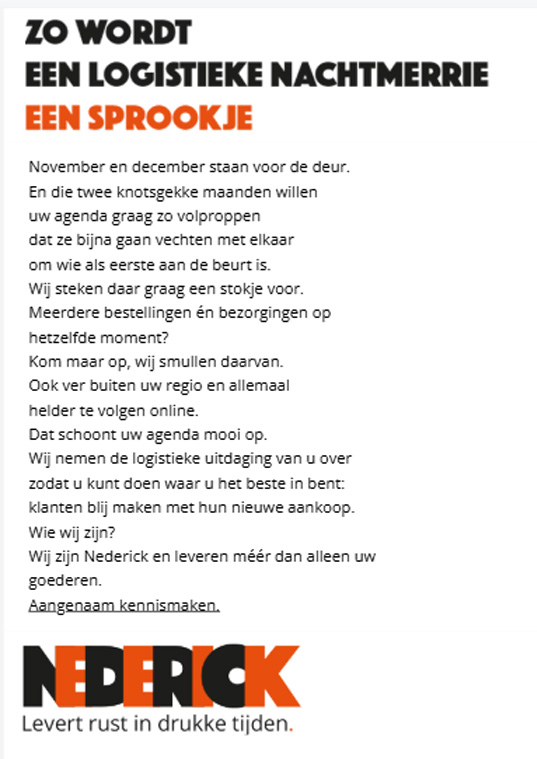
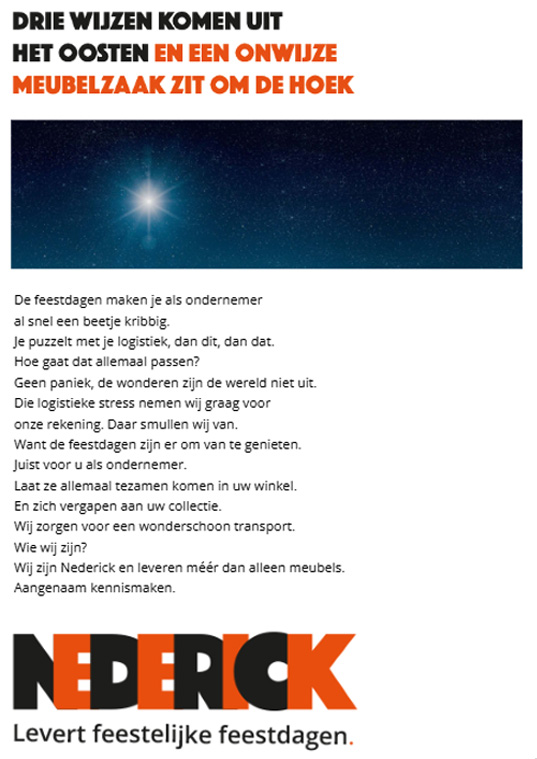
Nederick operates in a highly competitive logistics market where reliability, efficiency and trust are decisive. The organisation provides specialised furniture logistics services for retailers, interior professionals and project-based clients across regions and borders.
The challenge was not simply to develop a brand identity, but to create strategic clarity: a clear promise that could guide decision-making across the organisation — from planning and operations to communication, culture and growth.
Without such a compass, brand, service delivery and internal behaviour risked drifting apart.
My role
I worked closely with the company’s leadership as strategic brand advisor, responsible for defining and governing the overall brand strategy.
My responsibilities included:
Strategic analysis of market position, services and organisational dynamics
Development of a clear and distinctive brand promise
Translating brand strategy into operational and behavioural principles
Advising leadership on implementation and internal alignment
Safeguarding consistency across organisational touchpoints
My role focused on ensuring that brand strategy would function as a steering mechanism, not as a marketing layer.
Strategic choices
1. One promise as strategic anchor
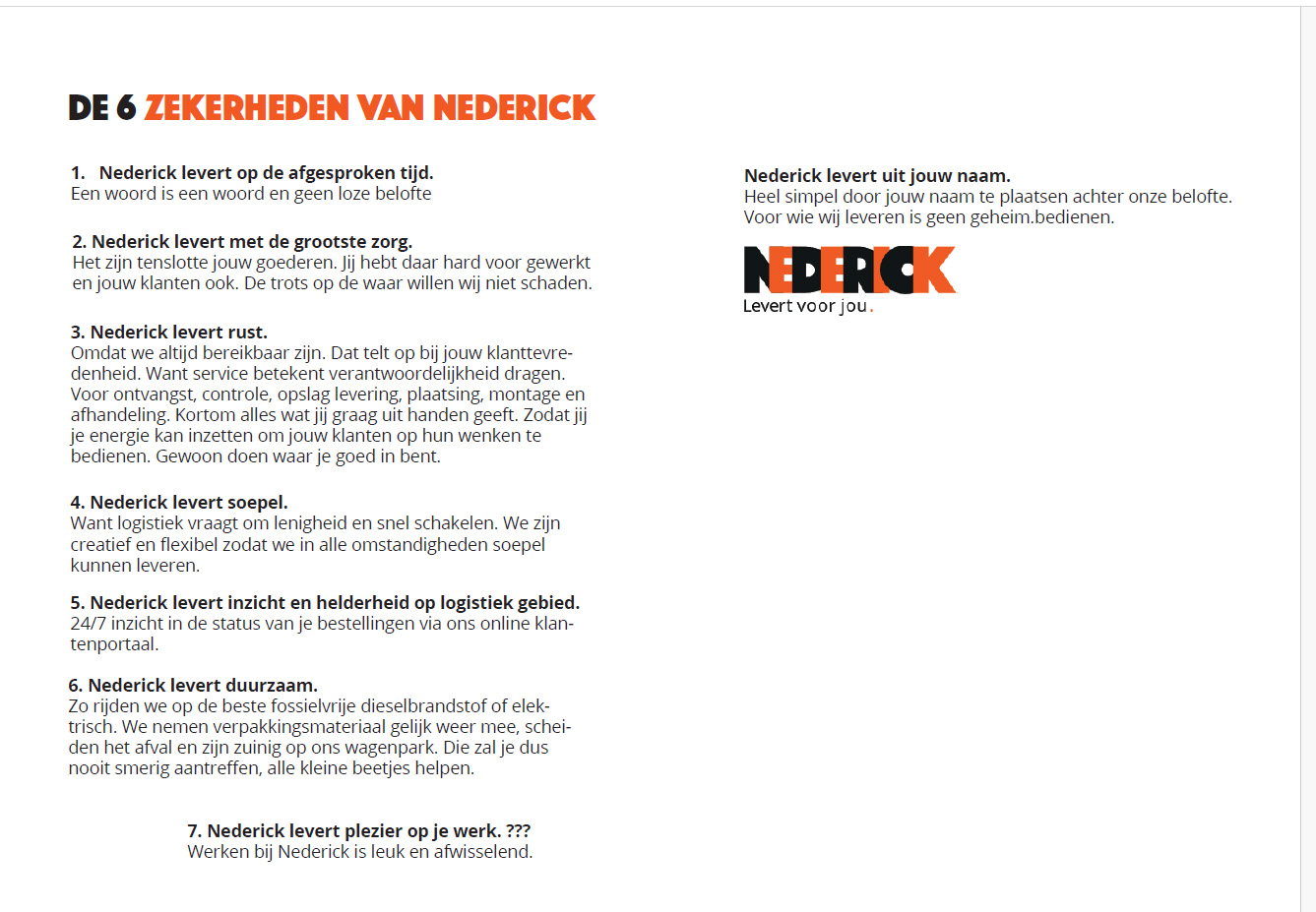
The central strategic choice was to define a single, clear brand promise: “Nederick delivers everything in one go.”
This was not positioned as a slogan, but as a guiding principle for:
Service design
Planning and logistics decisions
Customer communication
Internal behaviour and collaboration
2. Brand as behaviour, not expression
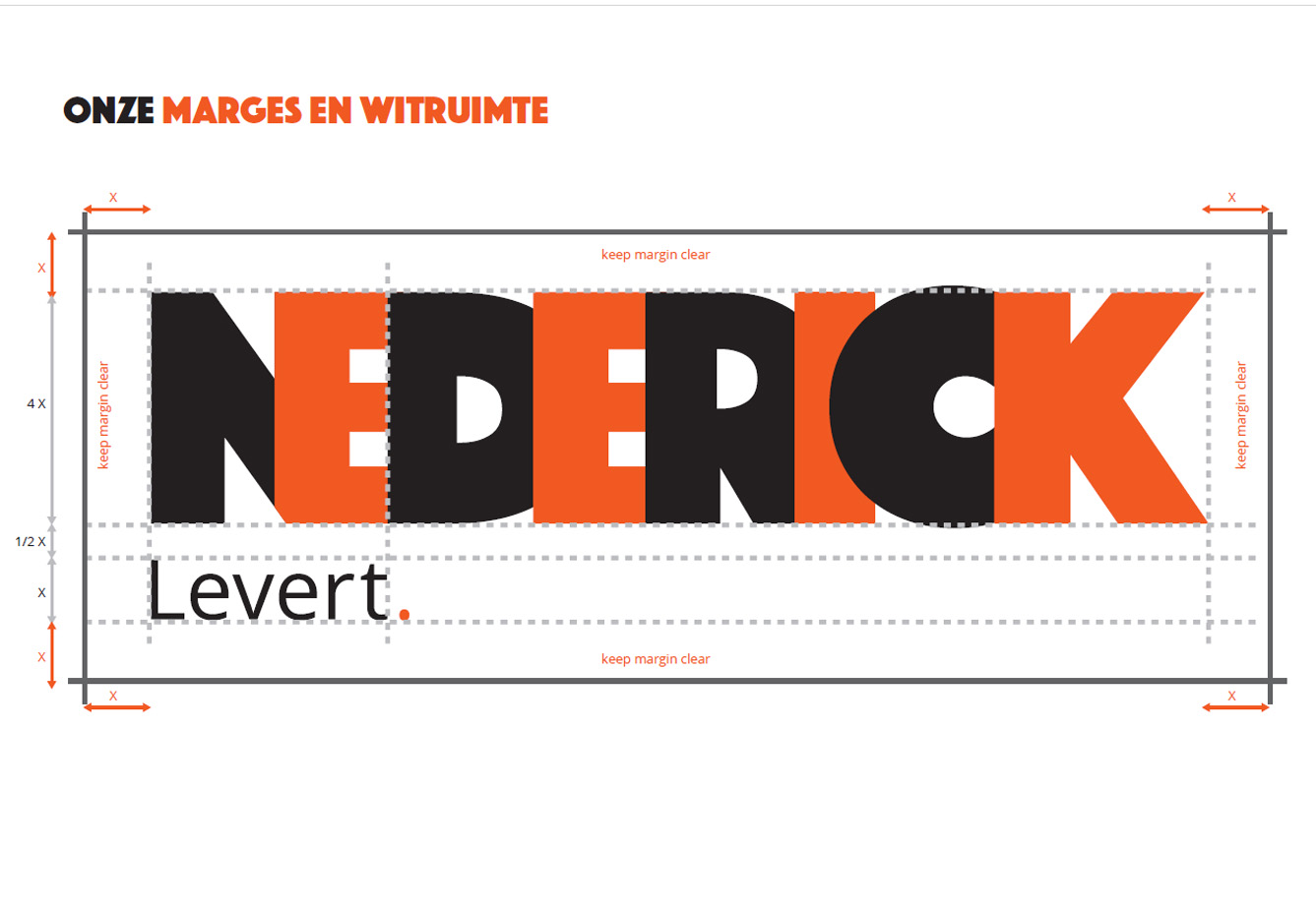
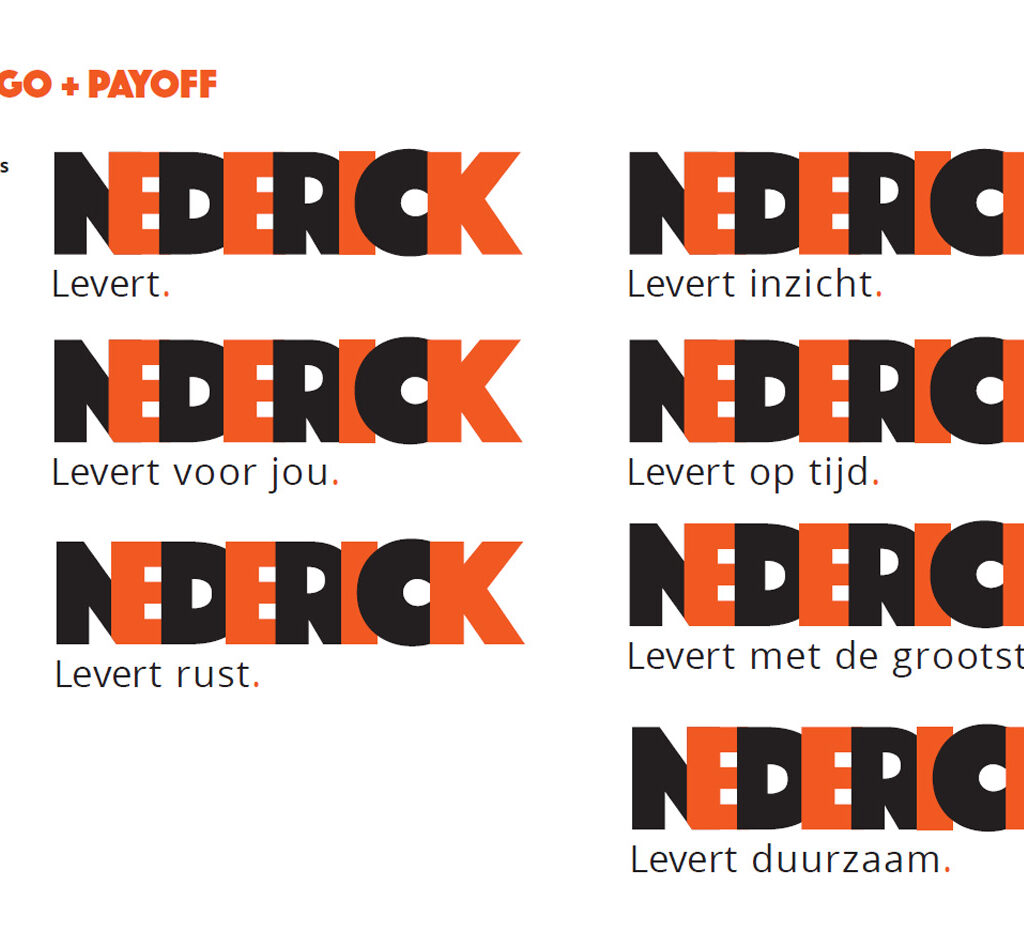
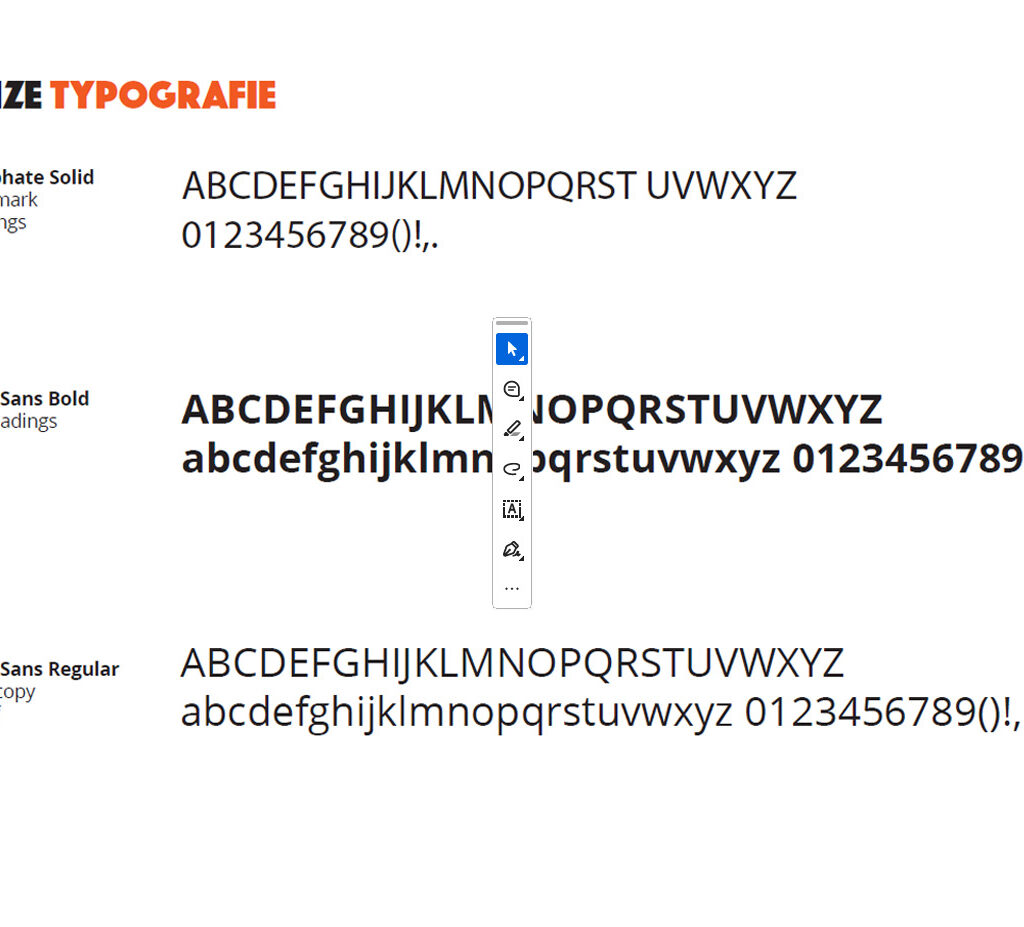
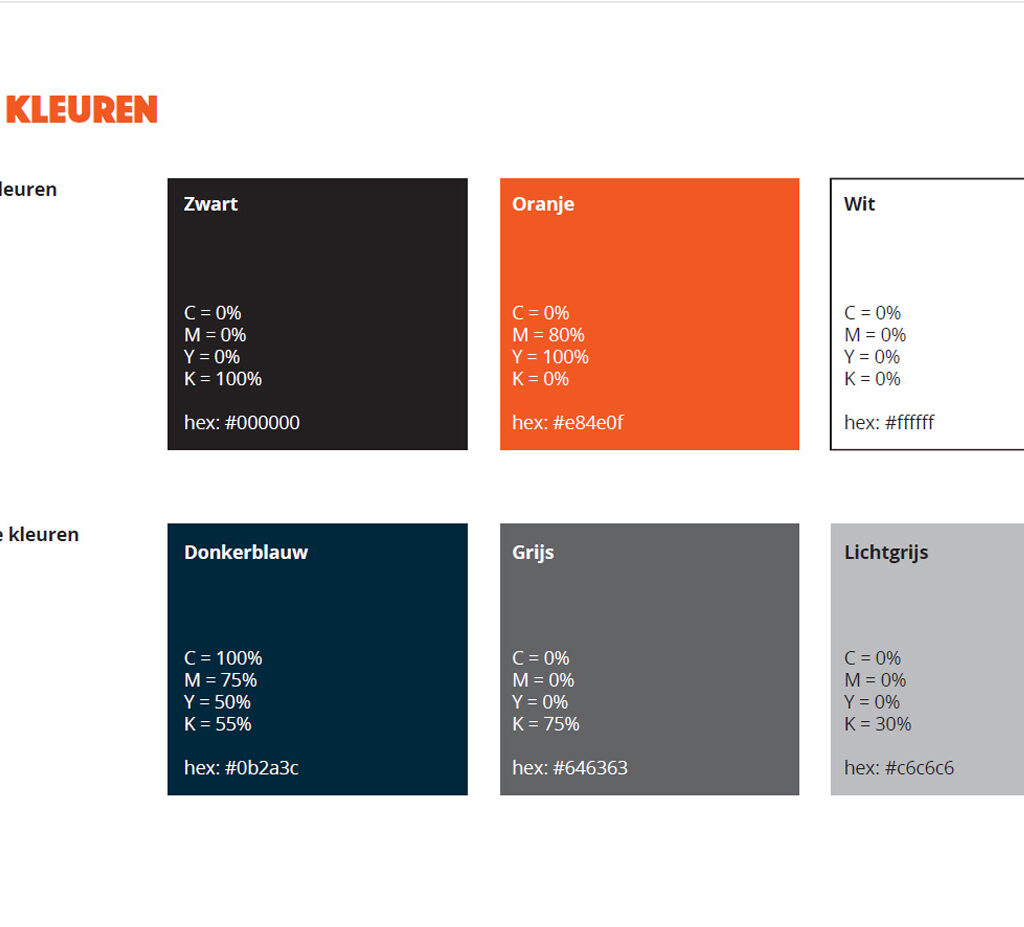
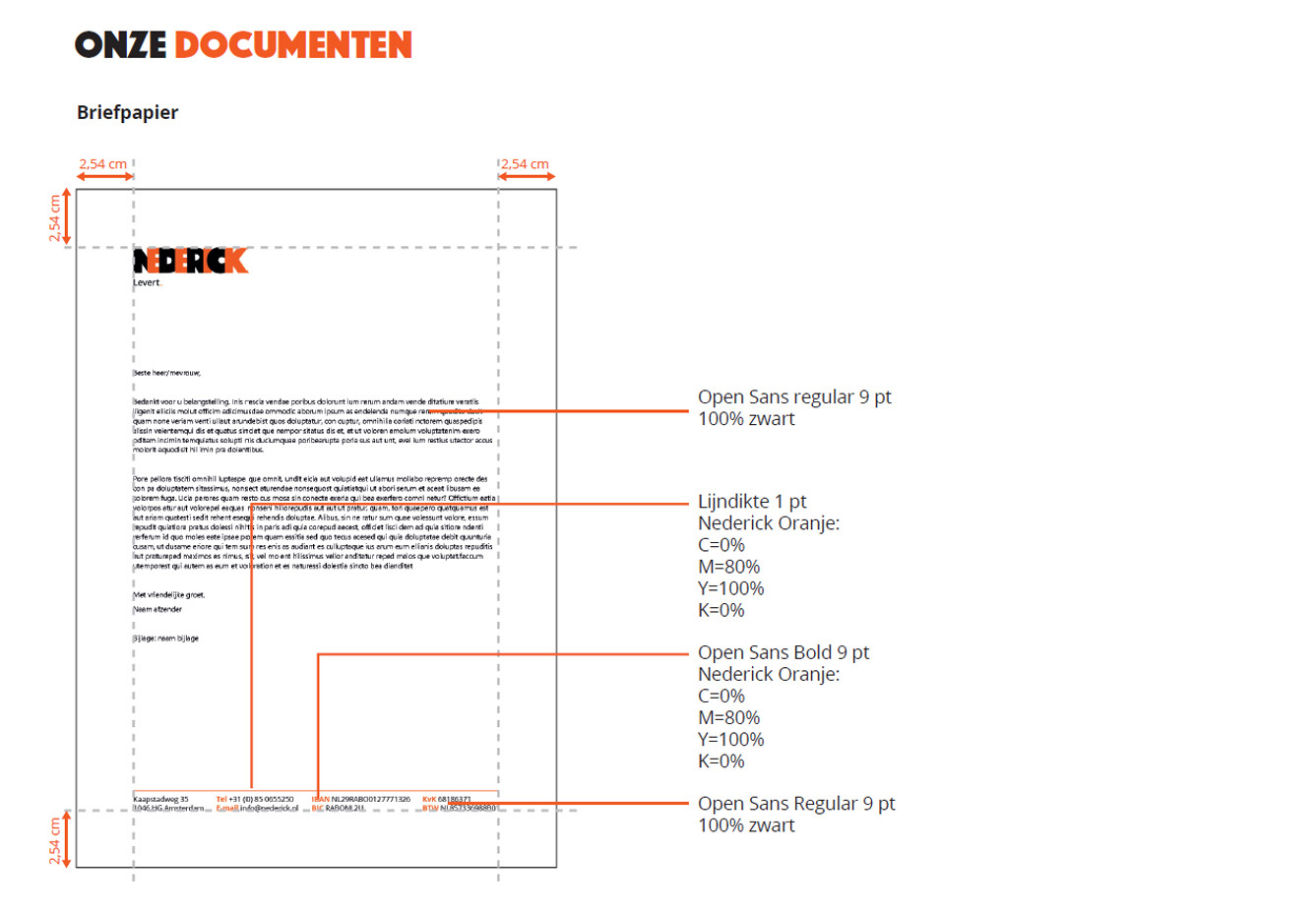
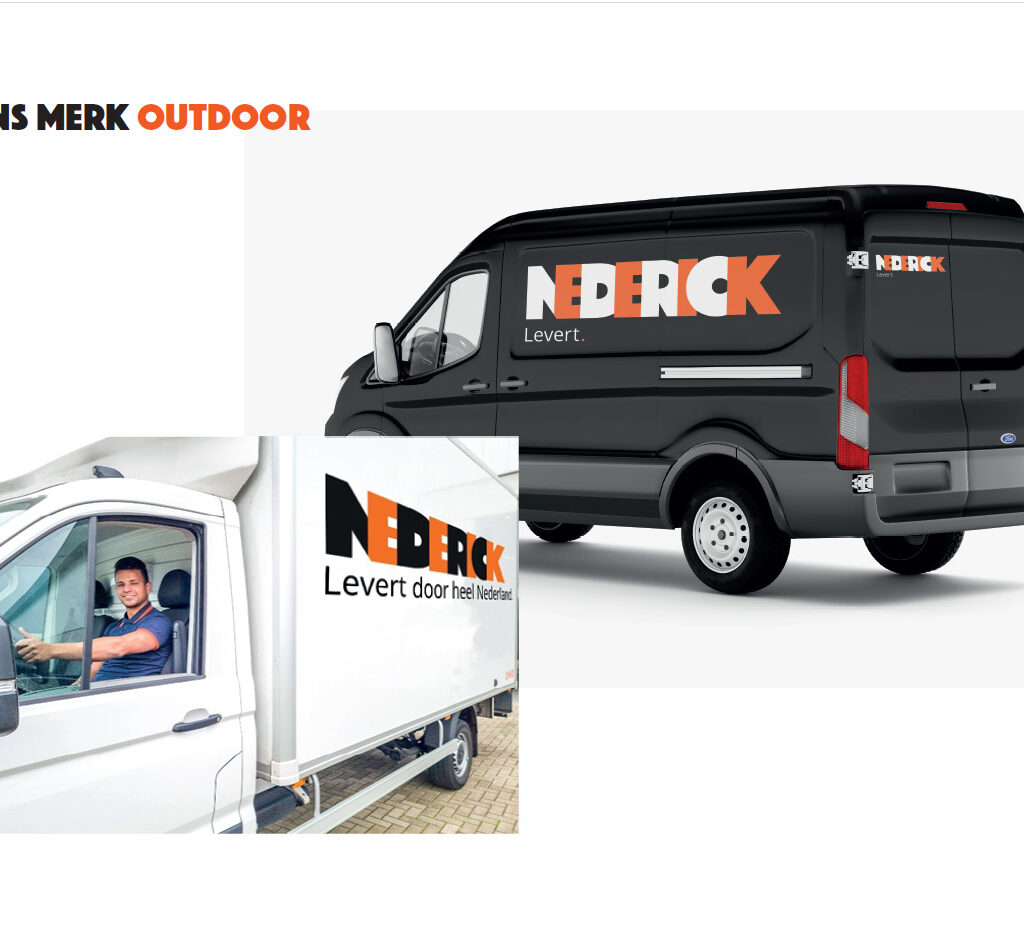
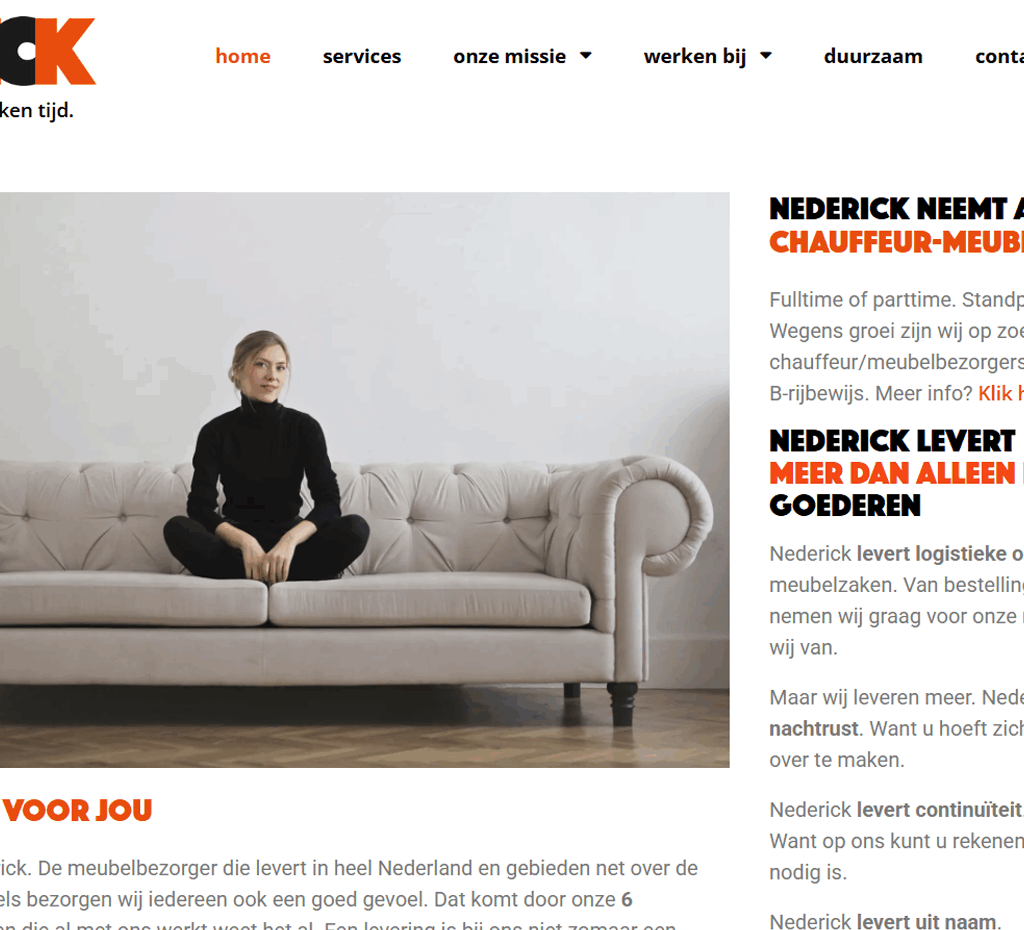
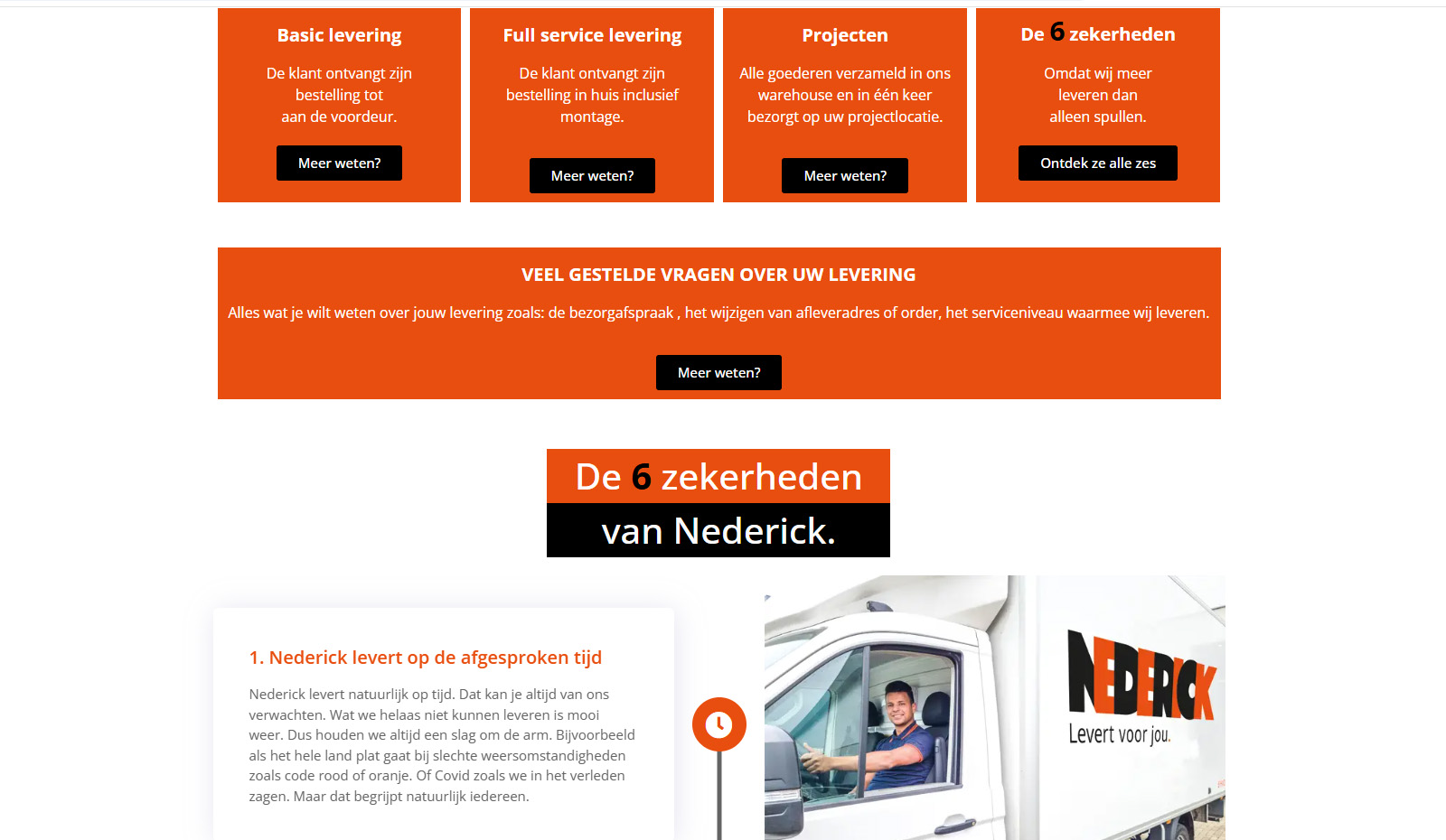
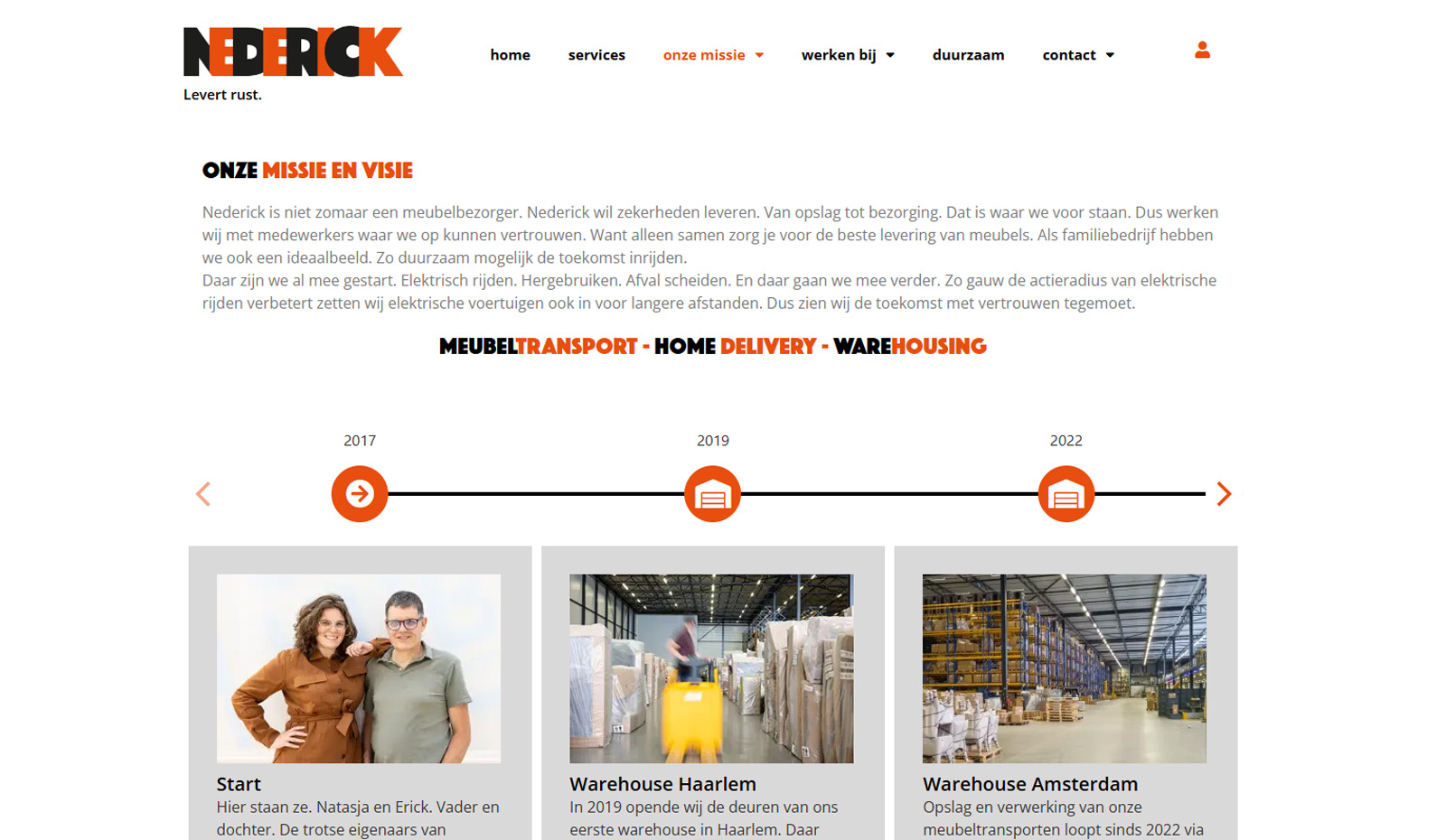
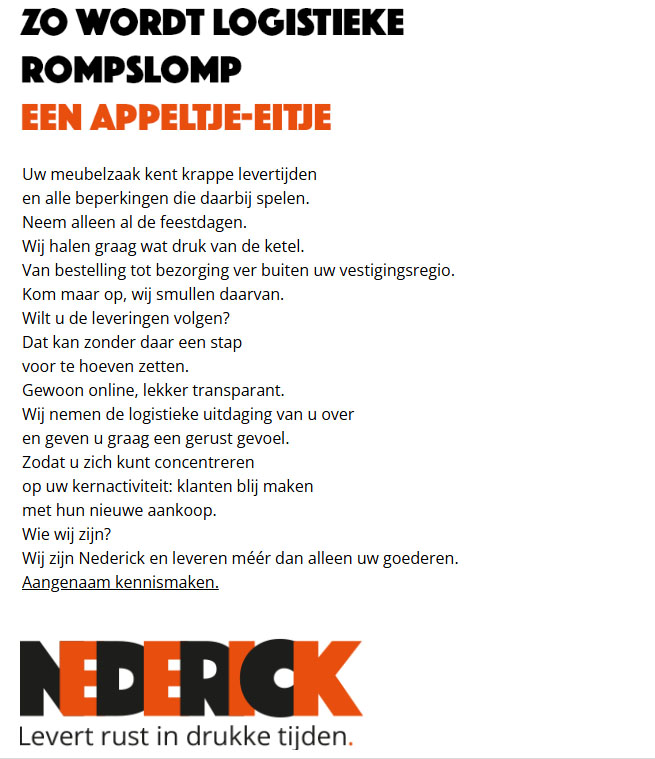
The brand strategy was deliberately translated into operational reality. Visual identity, digital channels, internal communication and physical touchpoints were aligned with the same promise, ensuring that the brand was experienced consistently in daily work.
3. Internal alignment before external visibility
Rather than launching the brand externally first, emphasis was placed on internal understanding and ownership. This ensured credibility and consistency when the brand became visible to customers and partners.
Impact
Clear and differentiated market positioning
Stronger internal alignment and shared direction
Increased consistency across service delivery and communication
The brand became a practical reference point for both leadership and teams.
Reflection
This case illustrates how brand strategy can function as an organisational compass. When promise, behaviour and operations align, brand stops being something an organisation claims — and becomes something it consistently does.